
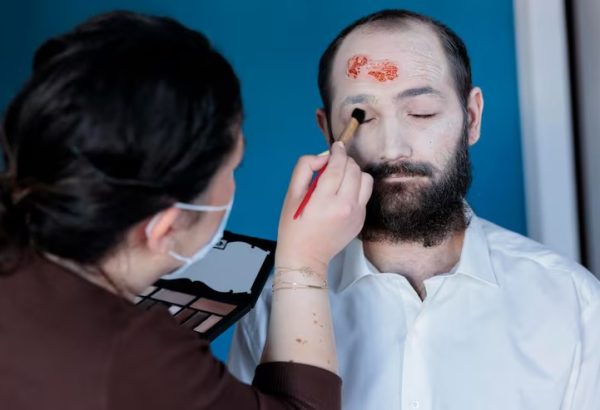
A special FX prosthetics school teaches far more than gluing a fake scar onto someone’s cheek. Students learn life casting, sculpting, molding, and application technique using real industry materials like silicone, gelatin, and foam latex. Cosmix has trained artists in this exact process for over 25 years, building toward genuinely employable skill.
The first project students tackle is applying a prosthetic on day one of the course. This immediately introduces them to texture, edges, and what a finished application should actually look like, setting the standard they’ll be working toward as they progress into more advanced sculpting and design work later.
What Does the Core Prosthetics Course Cover?
The SFX Makeup Prosthetics course runs 210 clock hours with no prerequisites required. Students design, create, and apply different types of prosthetic and dental appliances, working through the entire process from conceptualization through life casting, sculpting, molding, airbrushing technique, and final application, including blood delivery methods for realistic effects.
This course can technically be taken alone as an individual course, though it’s worth noting that standalone courses aren’t accredited by ACCSC or approved by the Florida Commission of Independent Education, and don’t qualify students for the same career services available to graduates of the larger accredited programs.
How Does Creature Design Build on This?
Once students complete the prosthetics prerequisite, Creature Design opens up as the next step, a 34 hour course focused on designing, constructing, and molding an advanced three dimensional sculpted character. This course is ideal for artists who want to work in a special makeup effects lab building projects for film, television, or theatrical productions.
Students produce a completed creature from conceptual design all the way through to final application. That full process, idea through execution, mirrors exactly what happens professionally when a special effects lab gets a script calling for a fantastical character that doesn’t exist anywhere outside the artist’s imagination and skilled hands.
What About Cosplay and Prop Building?
Beyond prosthetics and creature design, Cosplay rounds out the special effects track, a 56 hour course where students make wings, armor, swords, and other props to complete a final character captured in a photo shoot. Cosplay, short for costume play, involves participants representing specific characters through costume and accessories.
This course requires both the prosthetics and creature design prerequisites, reflecting how skills stack progressively. A student pursuing training at a Special FX Prosthetics School moves from basic application through advanced sculpting and finally into full prop and costume construction, building a genuinely comprehensive special effects skill set along the way.
Why Is Florida Specifically Relevant Here?
There are only a few special effects makeup schools in the entire country, and Cosmix is one of two in Florida specifically. That scarcity matters for prospective students, since specialized, hands on prosthetics training isn’t something widely available everywhere, making program location an important practical consideration when applying.
What Career Outcomes Does This Training Support?
According to the U.S. Bureau of Labor Statistics, in 2023 the average hourly rate for a special FX makeup artist was $53, with an annual wage of $109,630. Graduates have gone into special FX labs designing and fabricating prosthetics, theme parks, haunted houses, cosplay events, and toy or video game productions.
Cosmix recommends students who want to work specifically in the film industry enroll in the Master Makeup Artistry Pro Program to gain the necessary skills across the entire spectrum of makeup artistry, rather than focusing on special effects alone without broader beauty and fashion training to support it.
Final Thoughts
Training at a special FX prosthetics school means building real, tangible skill across materials, sculpting, and full character creation, not just learning a few quick tricks. The progression from prosthetics through creature design and cosplay reflects exactly how professional special effects work actually unfolds on real productions.
Request a tour or catalog from Cosmix to see the lab facilities directly before the next class begins June 8th, 2026.
FAQs
Do I need prior experience to start the prosthetics course?
No, the SFX Makeup Prosthetics course has no prerequisites and is designed for students starting from scratch.
What materials are used in prosthetics training?
Students work with silicone, gelatin, and foam latex materials throughout the course.
Is special effects training only useful for film work?
No, graduates also work in theme parks, haunted houses, cosplay events, and toy or video game productions.