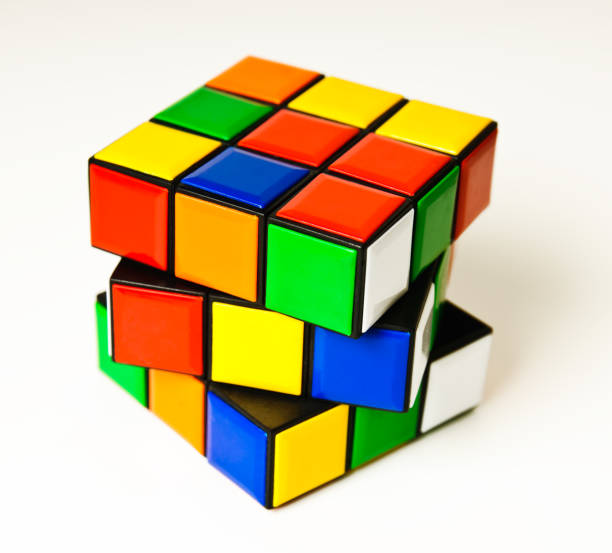
The 4×4 Rubik’s Cube, also known as the Rubik’s Revenge, is a more advanced and challenging version of the classic 3×3 cube. Solving it requires not only logic and patience but also a good understanding of algorithms and strategic movements. Unlike the 3×3, the 4×4 doesn’t have fixed centerpieces and comes with added complexities like parity errors. If you’re serious about cracking this puzzle, the best place to begin is understanding the correct 4×4 rubik’s cube formula and learning how to apply it at each stage of the solve.
In this guide, we’ll walk you through the basic structure of the 4×4 cube, the step-by-step solving process, essential algorithms, and useful tips to avoid common mistakes.
Understanding the 4×4 Cube Structure
Before diving into the formulas, it’s essential to understand how the 4×4 cube differs from the standard 3×3:
- No fixed centers: All center pieces are movable, which can make orientation tricky.
- Edge pairing: Each edge contains two pieces that must be paired before solving.
- Parity errors: These are unsolvable situations that don’t occur in 3×3 cubes, and they require special algorithms to fix.
These differences mean that while some techniques from the 3×3 are transferable, the 4×4 demands its own unique solving method and formulas.
Step-by-Step Guide to Solve the 4×4 Rubik’s Cube
1. Solve the Centers
Start by solving all six center faces. Since centers are movable, you’ll need to align four small center pieces of the same color on each face. Use simple slice movements (like r, R, u, U) and their reverses to achieve this.
Tip: Solve opposite center colors (e.g., white and yellow) first to maintain orientation throughout the solve.
2. Pair the Edges
Pair all the edge pieces to form complete edges that resemble those of a 3×3 cube. This is often considered the most tedious part of solving a 4×4.
Basic edge pairing algorithm:
(U’ L F’ L’) (U L F L’)
Repeat the edge pairing process for all 12 edges.
3. Solve Like a 3×3 Cube
Once edges are paired and centers are solved, you can now approach the cube like a traditional 3×3. Use your regular 3×3 methods or algorithms for this stage.
4. Fix Parity Errors
The 4×4 cube can give rise to two types of parity errors:
- Edge Parity (OLL Parity): Occurs when a single edge is flipped.
Use this algorithm:
r U2 l’ U2 r’ U2 r U2 l U2 r’ U2 - PLL Parity: When two opposite corners need to be swapped, use:
(Uu)2 (Ll)2 U2 l2 U2 (Ll)2 (Uu)2
This is where knowing the 4×4 rubik’s cube formula is absolutely crucial to complete your solve without errors.
Tips to Improve Your Solving Time
- Learn Finger Tricks: Smooth transitions between moves will increase your speed.
- Practice Edge Pairing: This is often the slowest part for beginners. Practice pairing efficiently.
- Use Color Recognition: Improving your ability to recognize color patterns will help during the center and edge solving stages.
- Minimize Cube Rotations: Learn how to do moves without constantly rotating the cube; it saves valuable seconds.
Common Mistakes to Avoid
- Misaligning Centers: Keep your centers properly aligned when solving edges, or the entire cube can get scrambled.
- Over-relying on Intuition: In complex stages like parity or edge pairing, rely on algorithms, not just visual guesses.
- Ignoring Parity Prep: Always check for potential parity errors early to avoid double work.
Why Learn the 4×4 Rubik’s Cube?
Mastering the 4×4 cube helps deepen your understanding of cube mechanics and enhances your algorithmic thinking. It also prepares you for more advanced cubes like the 5×5 or Ghost Cube. Whether you’re solving for fun or speedcubing competitively, learning the 4×4 rubik’s cube formula provides a structured path toward better performance and mental agility.
FAQs
Q1. What is the difference between 3×3 and 4×4 cube formulas?
The 4×4 includes additional steps like edge pairing and fixing parity errors, which are not found in 3×3 algorithms.
Q2. What is a parity error and how do I fix it?
A parity error occurs when a situation arises that cannot exist on a 3×3 cube. These require special algorithms like the OLL or PLL parity formulas to fix.
Q3. How long does it take to solve a 4×4 cube?
For beginners, it may take 10–30 minutes. With practice and algorithm mastery, average times drop below 2 minutes for many solvers.
Q4. Can I solve the 4×4 cube without learning new algorithms?
Only partially. You can use your 3×3 knowledge after pairing edges, but you must learn new algorithms specifically for edge pairing and parity errors.
Conclusion
Solving a 4×4 Rubik’s Cube may seem intimidating at first, but with a solid grasp of the 4×4 rubik’s cube formula, patience, and consistent practice, anyone can master it. The key lies in understanding each phase, practicing the right algorithms, and enjoying the process of discovery and improvement.