When you think of Turkey, pictures of Istanbul’s iconic blue domes, hot air balloons over Cappadocia, or sun-soaked Mediterranean beaches might immediately come to mind. However, beneath Turkey’s diverse landscape lies another ancient secret that has drawn travelers for over two millennia: rich, mineral-dense thermal springs.
 Sitting atop a major geothermal belt, Turkey boasts over 1,500 natural thermal sources. From ancient Roman emperors seeking relief from battle fatigue to modern travelers looking for holistic relaxation, people have long flocked to these geothermal pools.
Whether you are looking to soak in calcium-rich white travertines, heal aching joints in sulfur mud baths, or relax in luxurious modern spa resorts, this guide covers everything you need to know about Turkey’s finest thermal springs and wellness hotspots.
Sitting atop a major geothermal belt, Turkey boasts over 1,500 natural thermal sources. From ancient Roman emperors seeking relief from battle fatigue to modern travelers looking for holistic relaxation, people have long flocked to these geothermal pools.
Whether you are looking to soak in calcium-rich white travertines, heal aching joints in sulfur mud baths, or relax in luxurious modern spa resorts, this guide covers everything you need to know about Turkey’s finest thermal springs and wellness hotspots.
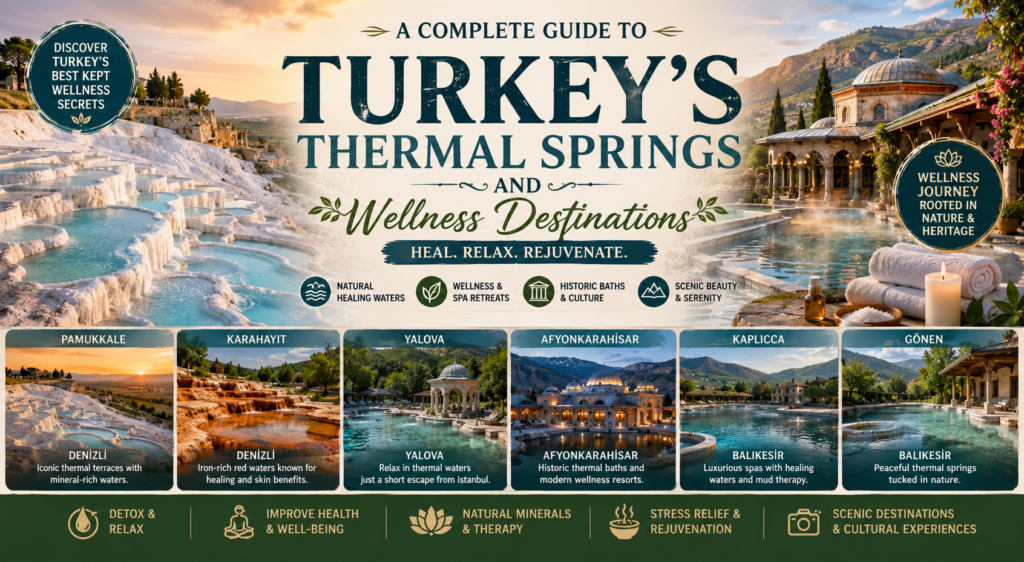 Sitting atop a major geothermal belt, Turkey boasts over 1,500 natural thermal sources. From ancient Roman emperors seeking relief from battle fatigue to modern travelers looking for holistic relaxation, people have long flocked to these geothermal pools.
Whether you are looking to soak in calcium-rich white travertines, heal aching joints in sulfur mud baths, or relax in luxurious modern spa resorts, this guide covers everything you need to know about Turkey’s finest thermal springs and wellness hotspots.
Sitting atop a major geothermal belt, Turkey boasts over 1,500 natural thermal sources. From ancient Roman emperors seeking relief from battle fatigue to modern travelers looking for holistic relaxation, people have long flocked to these geothermal pools.
Whether you are looking to soak in calcium-rich white travertines, heal aching joints in sulfur mud baths, or relax in luxurious modern spa resorts, this guide covers everything you need to know about Turkey’s finest thermal springs and wellness hotspots.
Why Turkey Is a Top Global Wellness Destination
Turkey is uniquely positioned among the world’s top thermal spa destinations. Combining natural geological marvels with centuries-old wellness traditions, here is why a Turkish thermal vacation stands out:- High Mineral Content: Turkish spring waters are packed with beneficial minerals like calcium, magnesium, sulfur, iron, and bicarbonate, known for helping skin conditions, rheumatism, circulation, and muscle recovery.
- Rich Historic Charm: Many thermal baths are built right beside ancient Greco-Roman ruins, allowing you to swim among historic columns where royalty once bathed.
- Authentic Hammam Culture: Combining thermal soaking with a traditional Turkish Bath (Hammam)—complete with steam, body scrubs, and olive oil soap massages—delivers an unmatched wellness experience.
- Year-Round Accessibility: Many thermal destinations operate year-round, making them ideal escapes during autumn and winter when temperatures drop.
Top Thermal Springs and Wellness Destinations in Turkey
1. Pamukkale and Hierapolis (Denizli)
No thermal guide to Turkey is complete without mentioning Pamukkale, which translates to “Cotton Castle.” This UNESCO World Heritage site is famous for its dazzling white terraces formed by calcium-rich thermal waters cascading down the mountain side.- The Highlights: Walk barefoot along the glowing travertine pools filled with warm, milky-blue mineral water. Right above the terraces lies the ancient Greco-Roman city of Hierapolis.
- Must-Do Experience: Take a dip in Antique Pool (Cleopatra’s Pool), where you can swim directly over submerged ancient marble columns amidst warm, effervescent water.
- Best For: First-time visitors, photography lovers, and history enthusiasts.
2. Yalova: Istanbul’s Thermal Haven
Located just across the Sea of Marmara from Istanbul, Yalova is one of the most convenient spa retreats in the country. Developed heavily during the late Ottoman era and later beloved by Turkey’s founding father, Mustafa Kemal Atatürk, Yalova offers lush forest settings paired with therapeutic waters.- The Waters: Rich in sodium, calcium, and fluoride, Yalova’s hot springs stay around $38^\circ\text{C}$ to $40^\circ\text{C}$ ($100^\circ\text{F}$–$104^\circ\text{F}$).
- What to Do: Enjoy outdoor hot tubs surrounded by dense oak and pine forests, followed by traditional Ottoman steam rooms.
- Best For: Weekend getaways from Istanbul and nature lovers.
3. Afyonkarahisar: The Thermal Capital of Turkey
Located in western Anatolia, Afyonkarahisar (often simply called Afyon) is widely recognized as the thermal capital of Turkey. While less known to casual international tourists, it is home to world-class 5-star thermal resort hotels equipped with cutting-edge physical therapy centers.- The Waters: High concentrations of sulfur, radon, and carbon dioxide make Afyon ideal for relieving chronic pain, arthritis, and skin conditions.
- What to Do: Stay at a dedicated thermal medical resort where doctors customize hydrotherapy sessions, mud baths, and wellness treatments.
- Best For: Intensive physical therapy, medical wellness, and pure rejuvenation.
4. Bursa: Historical Baths and Mountain Luxury
Nestled at the base of Mount Uludağ, Bursa was the first capital of the Ottoman Empire and remains famous for its rich thermal heritage. Thermal water naturally flows from the mountain into centuries-old bathhouses across the city.- The Highlights: Historical hammams like the 14th-century Eski Kaplıca (Old Thermal Bath) combine classical Ottoman dome architecture with natural hot spring water.
- What to Do: Combine a winter ski trip on Mount Uludağ with deep thermal soaking in Bursa’s historical city baths.
- Best For: Culture seekers, history buffs, and winter vacationers.
5. Karahayit: The Red Thermal Waters
Just 5 kilometers from Pamukkale lies Karahayit, famous for its reddish-brown thermal water and colorful mud. Unlike Pamukkale’s white travertine waters, Karahayit’s thermal springs emerge at higher temperatures (around $60^\circ\text{C}$) and are rich in iron and calcium oxide.- Health Benefits: Renowned for treating skin ailments, joint inflammation, and digestive system relief.
- Best For: Travelers looking for a quieter, therapeutic alternative to nearby Pamukkale.
What to Expect: Thermal Bathing Etiquette & Practical Tips
To get the most out of your thermal wellness trip, keep these simple guidelines in mind:- Stay Hydrated: Thermal waters cause your body to sweat and lose fluids quickly. Always carry bottled water with you.
- Limit Soaking Times: Limit your individual thermal bath sessions to 15–20 minutes at a time to prevent overheating or dizziness.
- Respect Local Customs: Traditional Turkish hammams are often split by gender or have designated hours for men and women. Modern hotel thermal pools are usually mixed-gender, but swimsuits are required.
- Consult Your Doctor: If you are pregnant, have high blood pressure, or have cardiovascular issues, consult a physician before entering high-temperature thermal springs.
Best Time to Visit Turkey’s Thermal Destinations
While Pamukkale is popular year-round, the ideal time for a dedicated thermal and wellness vacation in Turkey is during autumn (September to November) and spring (March to May). Temperatures during these months are mild and comfortable for outdoor thermal bathing. Winter (December to February) is also a magical time to visit places like Bursa or Afyon, where you can soak in steaming outdoor hot springs surrounded by snow-covered landscapes.Planning Your Trip: Getting Your Visa and Travel Logistics
Preparing for your wellness journey to Turkey is straightforward, but securing your travel documents early ensures a stress-free trip. Most international travelers require an entry visa or e-Visa before arriving in Turkey. To ensure your wellness retreat starts smoothly without travel hiccups, working with an experienced visa support team is highly recommended.Why Apply Through Reliable Travel Visa Consultants?
Navigating visa requirements can sometimes feel overwhelming, but applying through dedicated professionals makes the entire process effortless.- Reliable Travel Visa Services: Global assistance that has helped thousands of travelers secure their entry visas accurately and on time.
- Round-the-Clock Assistance: Dedicated support teams are available 24/7, ensuring your queries receive expert responses within 72 hours.
- Experienced Visa Consultants: Professional guidance helps verify your documents prior to submission, significantly reducing the chance of delays or errors.
- Efficient Visa Application Process: Complete your application in just minutes using a simplified online form.